
How to Read the Building Coefficient Strategically (Not Theoretically)
Most people see the Building Coefficient (Floor Area Ratio – FAR) as a technical number. 0.8 1.2 1.6 In reality: FAR is a financial multiplier — not a planning detail. If read correctly, it can: Reveal hidden upside Prevent overpriced land purchases Define viable profit margins Protect developer returns
REAL ESTATE INVESTMENT
Christos Boubalos - poli.gr
2/20/2026
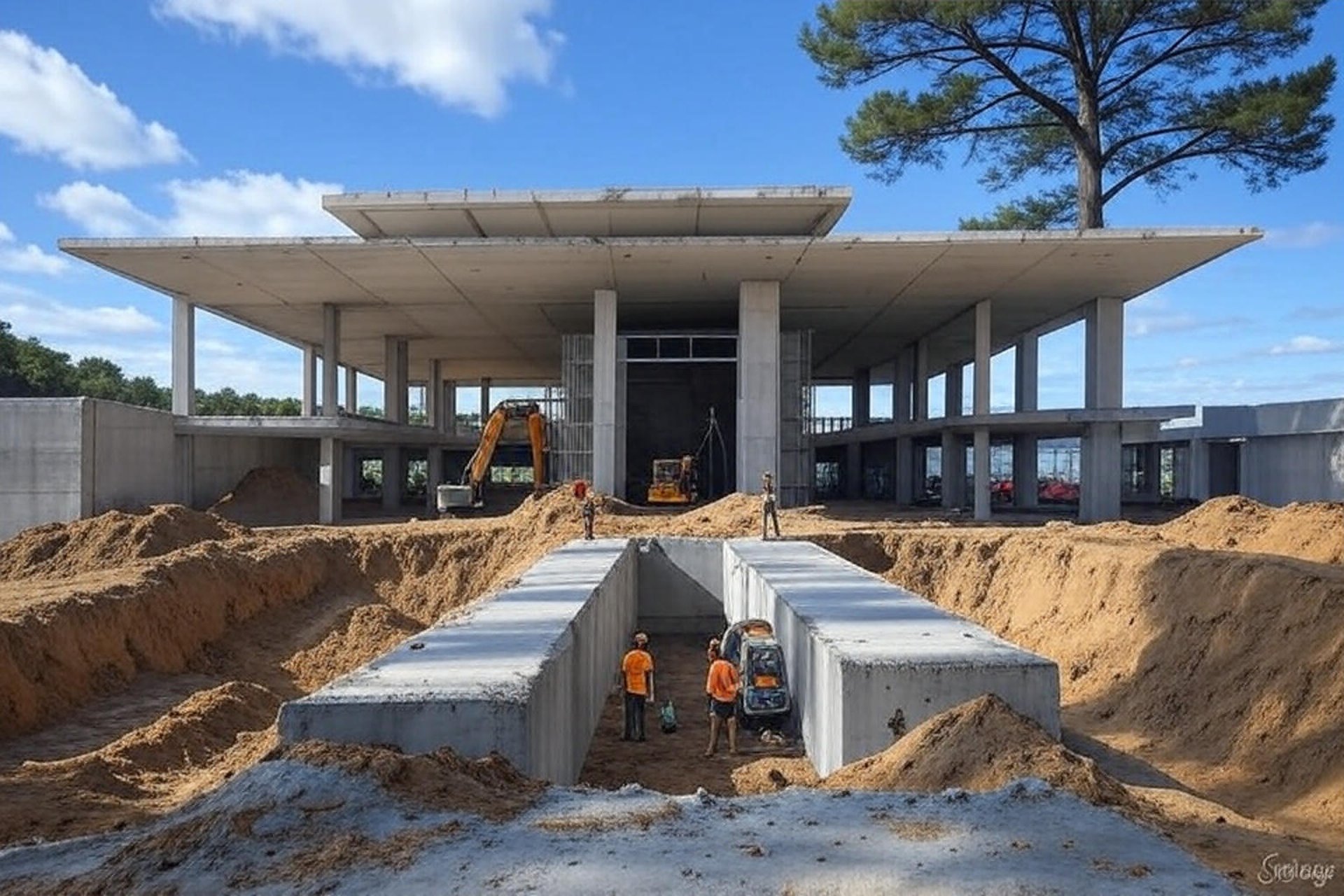
Theoretical Buildable Area ≠ Real Buildable Area
Example:
Plot size: 750 sqm
FAR: 0.8
Theoretical buildable area:
750 × 0.8 = 600 sqm
That is what the paper says.
But in practice you must verify:
Maximum permitted height
Mandatory setbacks
Coverage ratio
Plot width and shape
Open space requirements
There are cases where:
Theoretical: 600 sqm
Actually buildable: 540–580 sqm
Without an architectural feasibility check, FAR is just theory.
The Correct Land Value Equation
Assumptions:
Sale price: €4,250 / sqm
Construction cost: €2,500 / sqm
Developer margin: 30%
Buildable area: 600 sqm
Step 1: Cost Including Developer Profit
€2,500 × 1.30 = €3,250 / sqm
Step 2: Residual Value for Land
€4,250 − €3,250 = €1,000 / buildable sqm
Step 3: Total Land Value
600 × €1,000 = €600,000
Under these assumptions:
The plot “supports” approximately €600,000.
Anything above that:
Compresses margin
Increases risk
Makes the project fragile
And this is before including:
Soft costs (studies, permits)
Financing costs
Marketing
Taxes
Contingencies
The Time Dimension: The Hidden Risk
A 30% margin is not a 30% annual return.
If the project is completed in 2 years:
30% total margin ≈ 15% per year.
That is healthy for development risk.
If delays extend the project to 3 years:
The same 30% margin becomes ≈ 10% per year.
The developer:
Locks capital for longer
Delays the next project
Carries higher exposure
If prices soften during that period,
annual returns can easily fall to single digits.
A “30% margin project” can quickly become an 8% annual return.
For development risk, that is a very different equation.
Why This Matters to the Landowner
If the land price is set too high:
The project becomes non-viable
The developer walks away
The partnership collapses
If the land price is realistic:
The project moves forward
Risk is balanced
Returns are sustainable
The equation must work for both sides.
The Biggest Mistake
To calculate:
FAR × market price per sqm
and assume that equals land value.
The correct sequence is:
Realistically buildable sqm
Realistic selling price
Construction cost
Sustainable developer margin
Time risk adjustment
What remains is land value.
Not the other way around.
Strategic Conclusion
The Building Coefficient is not just a zoning number.
It is:
A value lever
A risk indicator
A development feasibility tool
Land pricing is not a negotiation game.
It is a mathematical balance that must work for:
The landowner
The developer
The timeline
The market cycle
If it does not work for all,
the project will never materialize.
The Role of Poli Real Estate
At Poli Real Estate, FAR is not treated as a technical detail.
It is analyzed in relation to:
Margin
Time
Risk
Liquidity
Because a plot may look like an opportunity —
and still not be financially viable.
👉 Submit your plot details for a full feasibility analysis before committing.
Brokerage
Contact
info@poli.gr
+30-6972-666688
+30-6972-885885
© 2025 Poli Real Estate. All rights reserved.