What Percentage Makes a Greek Land-for-Development Deal Truly Viable?
(An Investor’s Perspective with Real Numbers) Most discussions around Greek “antiparochi” (land-for-apartments development) focus on the landowner. But foreign investors ask a different question: If I invest in a development project structured as an antiparochi, is the deal financially sustainable? Because if the project margin is too thin: quality suffers delays increase cash flow tightens and downside risk grows Let’s examine a realistic example.
REAL ESTATE INVESTMENT
Christos Boubalos - poli.gr
2/13/2026
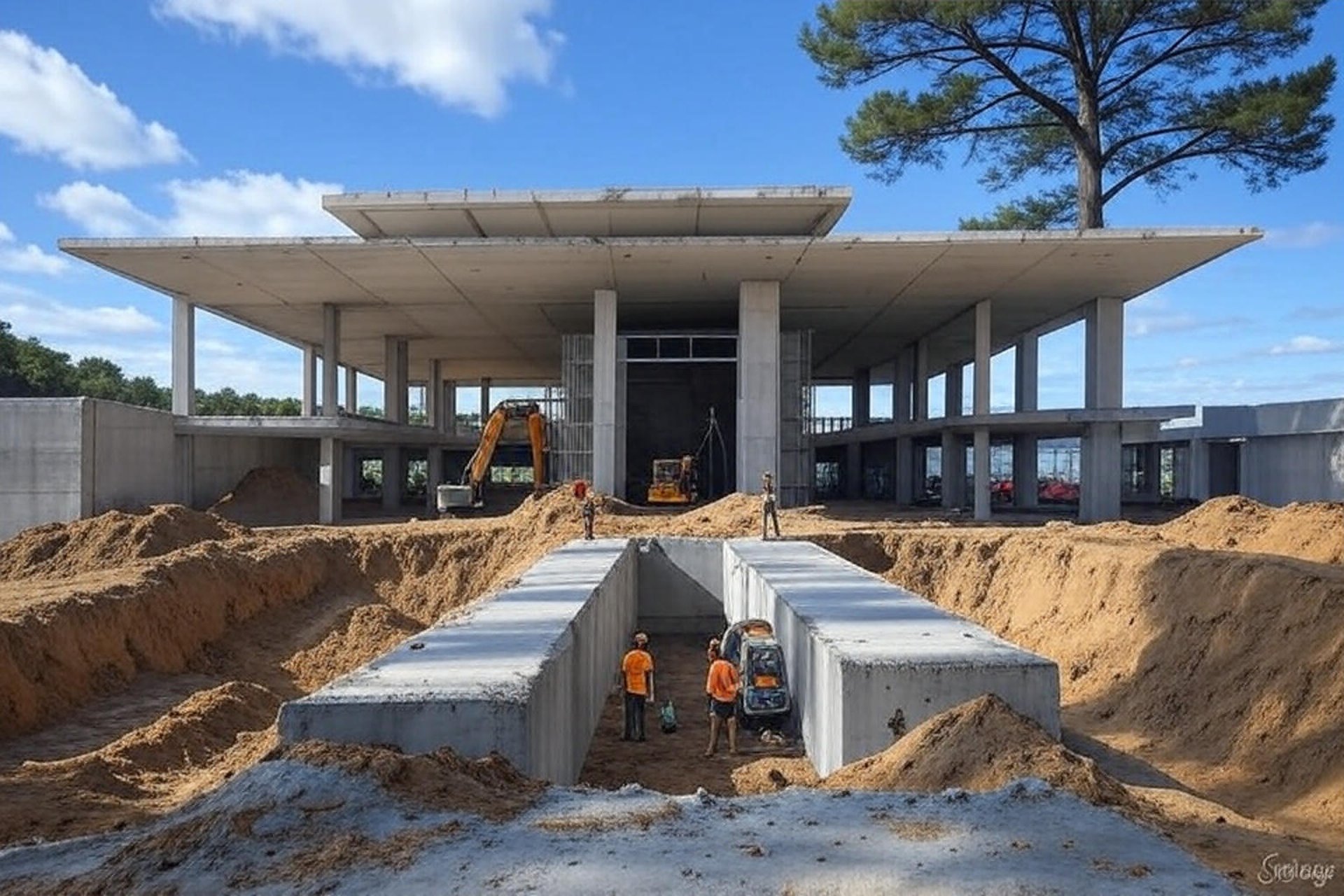
Example Scenario
Land: 750 sqm
Building coefficient (FAR): 0.8
Buildable area: 600 sqm
Construction cost: €2,300 / sqm
Estimated selling price: €4,000 / sqm
Total Construction Cost
600 × €2,300 = €1,380,000
(Excluding marketing, financing, and taxes for simplicity.)
Total Potential Sales Revenue
600 × €4,000 = €2,400,000
Gross Development Margin (Before Other Costs)
€2,400,000 – €1,380,000 = €1,020,000
This is not pure profit.
From this amount, we must still deduct:
marketing & brokerage
financing costs
legal & permitting
developer overhead
corporate taxes
contingency buffer
A healthy residential project typically requires:
15–20% net margin on total revenue
or20–25% margin on construction cost
Anything below that becomes structurally risky.
Now Let’s Test Different Antiparochi Percentages
In an antiparochi structure, the landowner receives a percentage of the built area instead of cash.
The higher that percentage, the smaller the developer’s retained sellable area — and therefore margin.
Scenario A – 25% Land Share
Landowner receives:
600 × 25% = 150 sqm
Value: 150 × €4,000 = €600,000
Developer retains:
450 sqm × €4,000 = €1,800,000
Margin before other costs:
€1,800,000 – €1,380,000 = €420,000
≈ 17.5% of revenue
✔ Healthy structure
✔ Comfortable margin
✔ Absorbs moderate market fluctuations
For an investor, this is structurally stable.
Scenario B – 30% Land Share
Landowner receives:
600 × 30% = 180 sqm
Value: €720,000
Developer retains:
420 sqm × €4,000 = €1,680,000
Margin:
€1,680,000 – €1,380,000 = €300,000
≈ 12.5% margin
⚠ Tight
⚠ Requires strong market conditions
⚠ Limited downside protection
Still feasible — but more exposed.
Scenario C – 35% Land Share
Landowner receives:
600 × 35% = 210 sqm
Value: €840,000
Developer retains:
390 sqm × €4,000 = €1,560,000
Margin:
€1,560,000 – €1,380,000 = €180,000
≈ 7.5% margin
✖ Structurally risky
✖ Highly sensitive to delays or price drops
✖ May push cost-cutting in construction
From an investor standpoint, this is thin.
The Hidden Risk: Market Softening
If selling prices drop from €4,000 to €3,700 per sqm:
Total revenue becomes:
600 × €3,700 = €2,220,000
Margins compress dramatically.
In the 35% structure, the project may barely break even — or worse.
Thin structures collapse first.
So What Is a Sustainable Range?
Under these assumptions:
✔ 28%–32% land share is generally realistic
✔ 25% is conservative and stable
✔ 35% requires exceptional pricing or lower construction cost
Anything above that shifts disproportionate risk to the developer — and therefore to equity investors.
Why This Matters to Foreign Investors
When investing in Greek development projects, you are not just analyzing price per sqm.
You are analyzing:
structural margin
downside protection
construction quality risk
time exposure
exit liquidity
As explained in
“What ‘Safe’ Really Means in Real Estate Investment”,
risk is not about volatility — it is about structural weakness.
A project with insufficient margin is structurally weak.
The Role of Poli Real Estate
At Poli Real Estate, development projects are evaluated through:
cost validation
sales price verification
margin stress-testing
land share sustainability analysis
exit liquidity scenarios
Because in land-for-development structures,
margin is not greed — it is safety.
Conclusion
The “best” antiparochi percentage is not the highest one.
It is the one that:
protects construction quality
survives market shifts
ensures realistic developer margin
protects investor capital
In development, sustainability is more important than headline numbers.
Interested in investing in a Greek development project?
Request a project viability analysis and structured development review.
Brokerage
Contact
info@poli.gr
+30-6972-666688
+30-6972-885885
© 2025 Poli Real Estate. All rights reserved.