Land-for-Apartments Deals: You’re Not Just Giving Land — You’re Trading Future Value
For many landowners, a land-for-apartments deal looks simple: “I give the land and receive apartments.” In reality, this type of agreement is not an exchange of land for square meters. It is an exchange of value, risk, timing, and control. And that’s exactly where most mistakes happen.
CONSTRUCTION AND NEW HOMES
Christos Boubalos - poli.gr
1/15/2026
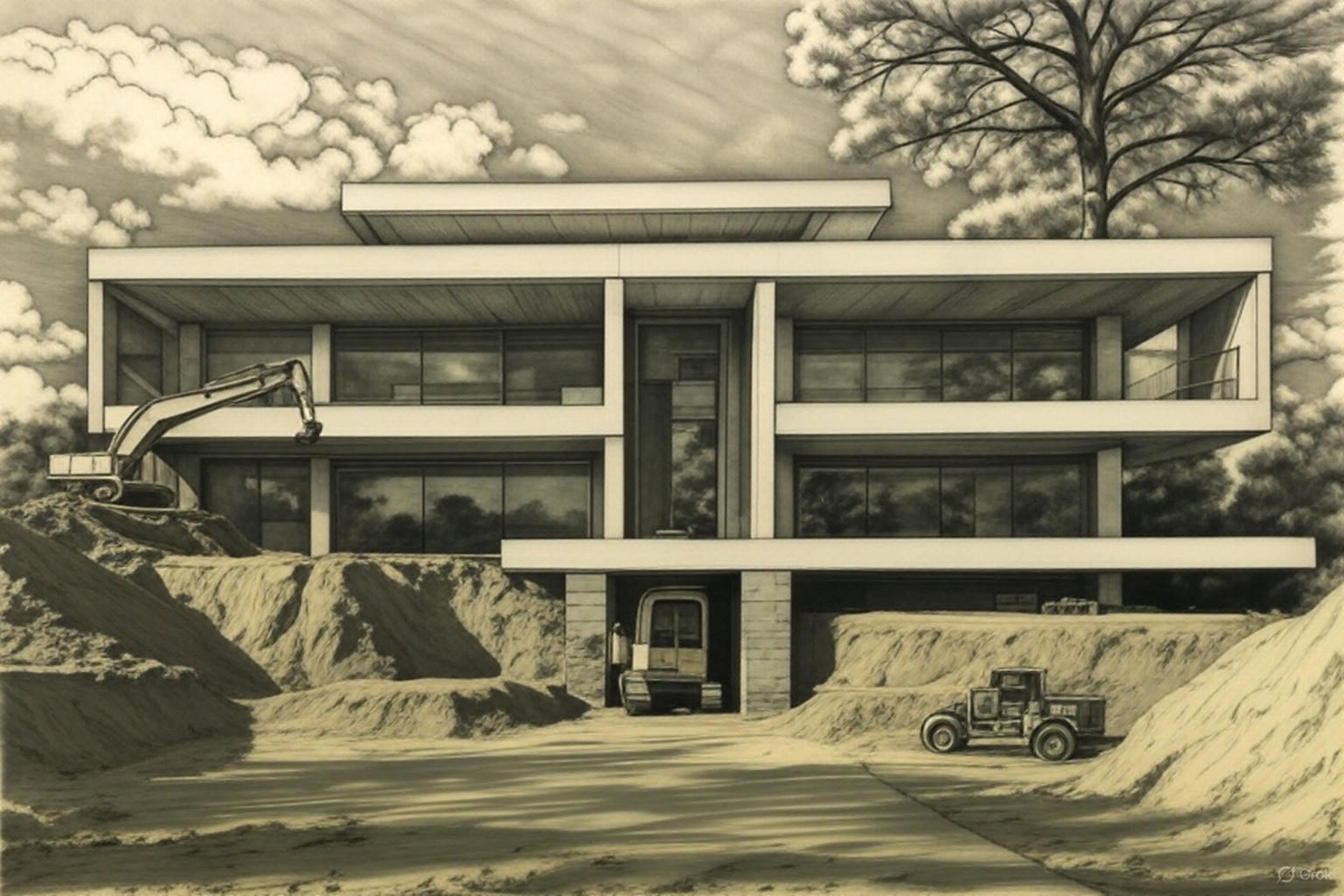
What you are really giving up in a land-for-apartments deal
You are not giving only:
a plot of land
a building coefficient
the right to develop
You are also giving:
control over the project
market timing
future marketability of the apartments
and often, your one real opportunity to unlock the land’s value
That is why this decision is not technical.
It is strategic.
Just like every serious real estate decision, the question is not whether to proceed, but how.
The biggest mistake: focusing only on square meters
Many landowners compare offers using a single metric:
“Who gives more square meters?”
This is a trap.
The real value of what you receive depends on:
layout efficiency
construction quality
energy performance
apartment positioning (floor, frontage)
overall marketability of the project
Fewer, well-designed apartments
often outperform larger quantities of poorly planned ones.
The same principle applies to investing overall, as explained in
“Why Net Return Is the Only Number That Truly Matters.”
The developer is not a contractor — they are your partner
In land-for-apartments agreements, the developer:
is not simply executing a build
enters a shared-risk partnership
This means you must assess:
real past projects (not just renders)
delivery consistency
actual material quality
post-delivery behavior
A project proves itself when it is:
sold
lived in
and holds value over time
Not when it looks good on paper.
Critical points many landowners overlook (and pay for later)
Which apartments you receive — not just how many
On which floors
What “construction quality” really includes
Who controls changes during construction
What happens if market conditions shift
How resale value is affected
A land-for-apartments deal does not end at signing.
That’s where it begins.
What this means for buyers
These projects are not relevant only to landowners.
They matter directly to buyers as well.
For buyers, apartments created through land-for-apartments deals:
are often offered off-plan, at more attractive entry prices
provide modern construction standards
allow better planning and customization
However, buying off-plan makes sense only when:
the developer is correctly selected
the project is designed for quality, not maximum exploitation
Otherwise, off-plan turns from opportunity into risk — as analyzed in
“The Investment Advantage of Off-Plan Projects (2026–2030).”
Old vs new developers: the real criterion is the person
Many buyers instinctively trust older developers.
That assumption is not always accurate.
Yes, established developers matter.
But new developers should not be excluded.
The real filter is not age.
It is the individual behind the project.
The new generation of developers:
operates with significantly higher construction standards
treats features once considered “extras” as basic
prioritizes:
energy efficiency
construction detail
functional layouts
material quality
In many cases, their output outperforms older projects with well-known names.
The role of Poli Real Estate in land-for-apartments deals
Landowners need guidance, not just options.
Poli Real Estate can:
structure a land-for-apartments proposal
evaluate and benchmark developer offers
or guide you safely through your own chosen partnerships
Our role is not to “close a deal.”
It is to ensure the deal holds its value over time.
Conclusion
Land-for-apartments deals are not easy.
But they remain the most powerful way to transform land into real assets — when done correctly.
The winners are not:
those who receive the most square meters
or those who hear the biggest promises
The winners are those who understand they are not trading land for apartments,
but today’s control for tomorrow’s value.
Share the basic details of your land using the contact button below, and Poli Real Estate will return with a free initial valuation and development assessment.
Brokerage
Contact
info@poli.gr
+30-6972-666688
+30-6972-885885
© 2025 Poli Real Estate. All rights reserved.